How much protein per day do you actually need? The official minimum is low. People who lift weights usually do better with more. Use the calculator below for a starting range, then read why that range exists and how to hit it without turning meals into homework.
Key takeaways
- For people who lift, a common target is 1.6 to 2.2 grams of protein per kg of body weight per day.
- The RDA of 0.8 g per kg is a minimum, not a goal for building muscle.
- Higher protein during a calorie deficit helps keep lean mass.
- Spread protein over meals, and talk to a doctor first if you have kidney disease.
Protein range calculator
A general range of 1.6 to 2.2 g per kg of body weight per day for people who lift. Not medical advice.
What the research says
A large meta-analysis of resistance-training studies found that extra protein improved muscle gains, with the benefit levelling off at about 1.6 g per kg per day (the upper end of the likely range was about 2.2 g per kg) (Morton et al., British Journal of Sports Medicine, 2018). The International Society of Sports Nutrition position paper gives a range of 1.4 to 2.0 g per kg for most active people (ISSN position stand). The ranges differ slightly, but they overlap. Most people do well with the middle.
Protein when you are losing weight
When you eat fewer calories, you can lose muscle as well as fat. Keeping protein high and continuing to lift helps protect lean mass. Many nutrition sources recommend 1.6 to 2.2 g per kg during a diet. See also our guides on lifting vs cardio for weight loss and the weight loss plateau checklist.
How to hit your number
- Anchor each meal. Pick a protein first: eggs, chicken, fish, Greek yogurt, tofu, beans, lean beef.
- Aim for 3 to 4 servings. Many sources suggest spreading intake over the day.
- Plan your gaps. If breakfast is light, add yogurt or eggs.
- Use shakes as a tool, not a requirement.
| Food | Typical serving | Protein (approx.) |
|---|---|---|
| Chicken breast | 4 oz (115 g) cooked | 30 g |
| Greek yogurt | 3/4 cup | 15 to 20 g |
| Eggs | 2 large | 12 g |
| Lentils | 1 cup cooked | 18 g |
| Tofu (firm) | 1/2 cup | 10 g |
Amounts vary by brand and preparation. Check labels. Where the protein comes from may matter too: read our post on a new study.
How Hey Broski helps
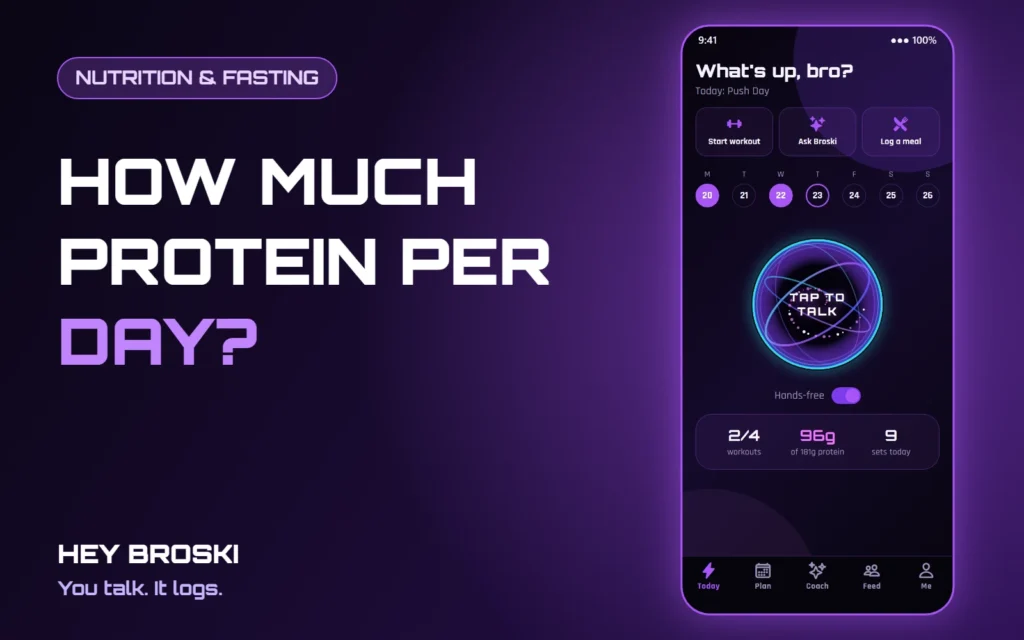
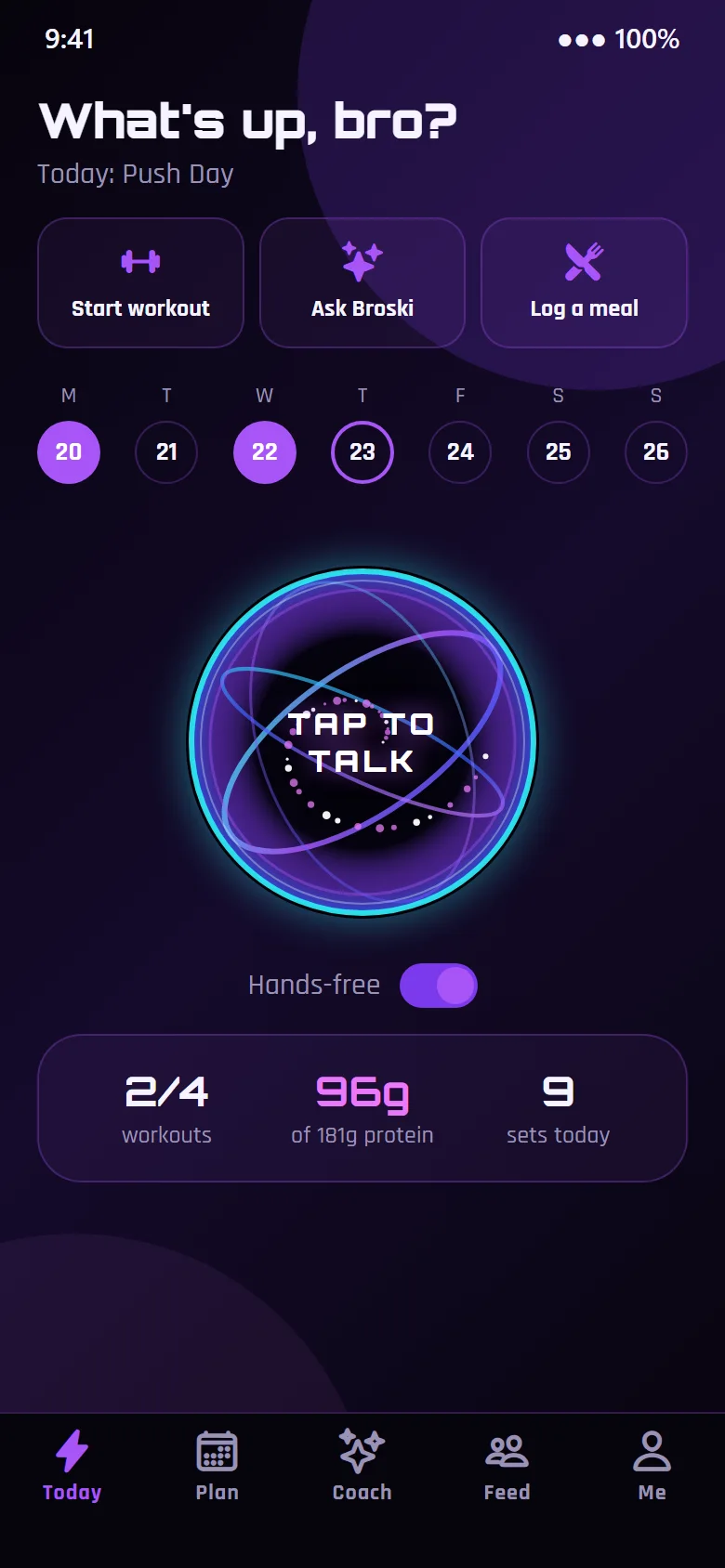
Hey Broski shows your protein target on the Today screen (for example “96g of 181g protein”). Log meals by voice, like “chicken and rice, 600 calories”, and the plan keeps your calories and protein next to your workouts. Pro and Elite members can also scan a photo of a meal for an editable estimate.
Get Hey Broski on Google Play A hands-free fitness logging app. No ads, and an AI coach when you want one. iPhone coming soon.
This is general information, not medical advice. If you have kidney disease or another condition, check with your doctor before raising protein.
Frequently asked questions
How much protein do I need per day to build muscle?
Most sources give 1.6 to 2.2 g per kg of body weight per day, which is about 0.7 to 1.0 g per pound.
Is 150 grams of protein too much?
For many people who lift, it is within a normal range. What matters is your body weight and goals. Use the calculator above.
How much protein do I need to lose weight?
Similar numbers, 1.6 to 2.2 g per kg, help preserve muscle during a calorie deficit.
Should I eat protein right after my workout?
Total daily protein matters most. Spreading it across meals is a sensible habit.
Keep reading
- How many sets per muscle per week: train hard enough to use the protein
- Lifting vs cardio for weight loss: what to do while you cut
- Intermittent fasting for lifters: fit protein into an eating window
Choosing between apps? See the side-by-side comparison chart of eight AI fitness apps.
Get Hey Broski on Google Play A hands-free fitness logging app. No ads, and an AI coach when you want one. iPhone is coming soon. See what’s new.