For years, most weight-loss advice has focused on one number: hit your protein target.
A new analysis published October 29, 2026, in BMJ Nutrition, Prevention & Health suggests a second question may matter just as much: where is that protein coming from?
What the researchers looked at
This was a secondary analysis of a randomized crossover trial with 62 overweight adults in Washington, D.C.
Each person spent 16 weeks on a low-fat vegan diet — fruits, vegetables, whole grains, and legumes, with no animal products — and 16 weeks on a Mediterranean-style diet rich in vegetables, fruit, legumes, fish, nuts, and olive oil, with lean white meat favored over red meat. There was a four-week washout period between the two phases, and neither group was told to restrict calories. Fifty-two people completed the full 36-week trial, and dietitians reviewed three-day food records at each visit.
What they found
In the original trial, published in 2022, participants lost an average of 6.0 kg (about 13 pounds) during the vegan phase, with no significant weight change during the Mediterranean phase.
The new analysis digs into why. Its key point is that the weight loss was linked to the shift away from animal protein and toward plant protein — not to a drop in total protein intake.
In other words, the participants didn’t lose weight because they ate less protein. They lost weight while changing the source of their protein.
What this does not prove
This is worth saying plainly, because headlines tend to skip it:
- This was a secondary analysis, not a brand-new trial designed only to test protein source.
- It was a relatively small group, following two specific eating patterns.
- It does not mean everyone should go vegan, or that animal protein is “bad.”
- It does not prove that swapping protein alone will cause weight loss for you.
What it does add is useful evidence for a question people ask all the time: if you’re already trying to eat well, could the balance of your protein matter, not just the total?
A practical way to use it
You don’t need a perfect diet to test this idea. Try shifting the balance, not eliminating foods you enjoy:
- Swap one meat-based meal a day for beans, lentils, tofu, or a whole-grain and legume combo.
- Keep your overall protein in a range that works for your training and your goals.
- Watch the whole pattern for a few weeks — your meals, your workouts, your weight trend — instead of judging one day.
- If you have a medical condition, are pregnant, or are on medication that affects diet or weight, check with your clinician before making a big change.
Small, repeatable swaps beat a dramatic diet you quit in two weeks.
How Hey Broski helps
This is exactly the kind of change that’s easy to intend and hard to track.
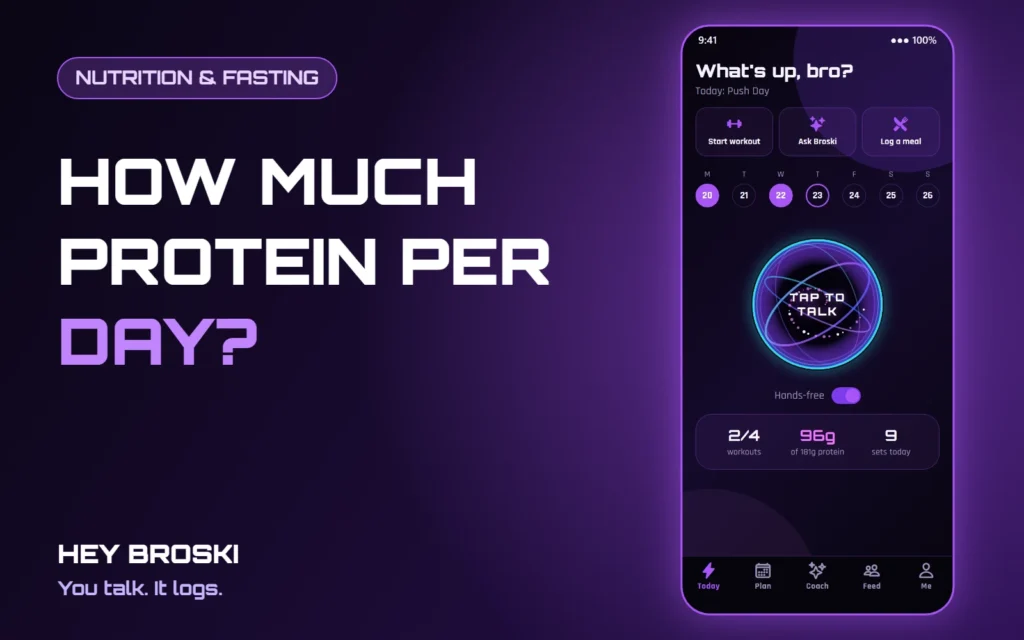
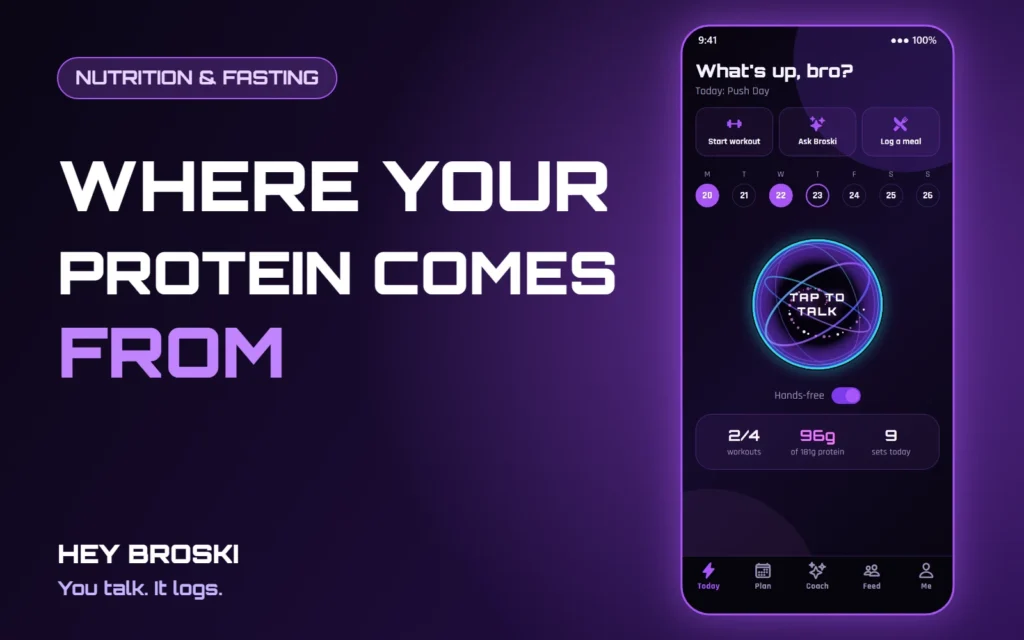
Hey Broski is built for busy people who don’t want to stop their workout to fumble with a phone. You can log a workout hands-free, and keep track of meals, calories, and protein without turning tracking into a second job. That matters here: if you’re testing whether more plant protein helps you, you need to actually see the pattern over time, not guess at it.
Log it, look at the trend, adjust one thing at a time — and let the app handle the remembering part.
Want to log your protein by voice? Hey Broski is live on Android: get it on Google Play.
Source: Effect of plant versus animal protein on body weight on a vegan and a Mediterranean diet: a secondary analysis of a randomised cross-over trial, BMJ Nutrition, Prevention & Health, published October 29, 2026. DOI: 10.1136/bmjnph-2026-001511.
This post is for general information only and is not medical advice.
Keep reading
- Intermittent fasting for lifters: another way to structure eating
- Your first 30 days of training: week 3 is all about protein
- Hands-free workout logging: log meals and sets by voice
Choosing between apps? See the side-by-side comparison chart of eight AI fitness apps.
Get Hey Broski on Google Play A hands-free fitness logging app. No ads, and an AI coach when you want one. iPhone is coming soon. See what’s new.