Muscles grow and get stronger when you ask them to do a little more than they are used to. That is progressive overload, and it is the one idea behind almost every program that works. This guide shows five simple ways to apply it, how to decide when to move up and what a real progression looks like.
Key takeaways
- Progressive overload means gradually making training harder over time.
- Weight is only one way. You can also add reps, sets, slow the tempo or shorten rests.
- Use double progression: add reps until you hit the top of a range, then add weight.
- You need a log, because you cannot beat last time if you do not know last time.
What progressive overload means
Do the same workout with the same weights for a year and your body has no reason to change. Raise the challenge a little at a time and it adapts. Beginners can often progress very quickly in the first months, then slow down as they get stronger (Cleveland Clinic explains the basics). Small steps beat big jumps: you do not need to add 50 pounds in a week.
Five ways to progress
- Add weight. The classic. Add the smallest jump you can, like 2.5 or 5 pounds.
- Add reps. Move from 3 sets of 8 to 3 sets of 10 with the same weight.
- Add sets. Go from 3 sets to 4 when your recovery allows.
- Slow the tempo. Lower for three seconds instead of one. Same weight, harder set.
- Rest less. Shorten rests as long as your reps stay strong.
Double progression: the easiest method
Pick a rep range, like 8 to 10. Start with a weight you can lift 8 times for each set. Each session, try to add a rep. When you reach 10 reps on every set, add a little weight and drop back to 8. Repeat.
How to know when to add weight
- You hit the top of your rep range on every set.
- The last rep still looked clean, not rushed or sloppy.
- You would have had one or two reps left in the tank.
If form breaks down, stay at the same weight. Better to repeat a week than to add a weight you cannot control. If a lift stalls for several sessions, check sleep, food (protein especially) and whether you are actually training the muscle often enough (how many sets per week).
Common mistakes
- Jumping weight too fast and failing reps.
- Changing exercises every week, so nothing can progress.
- Not writing it down. Track every workout, or you are guessing.
How Hey Broski helps
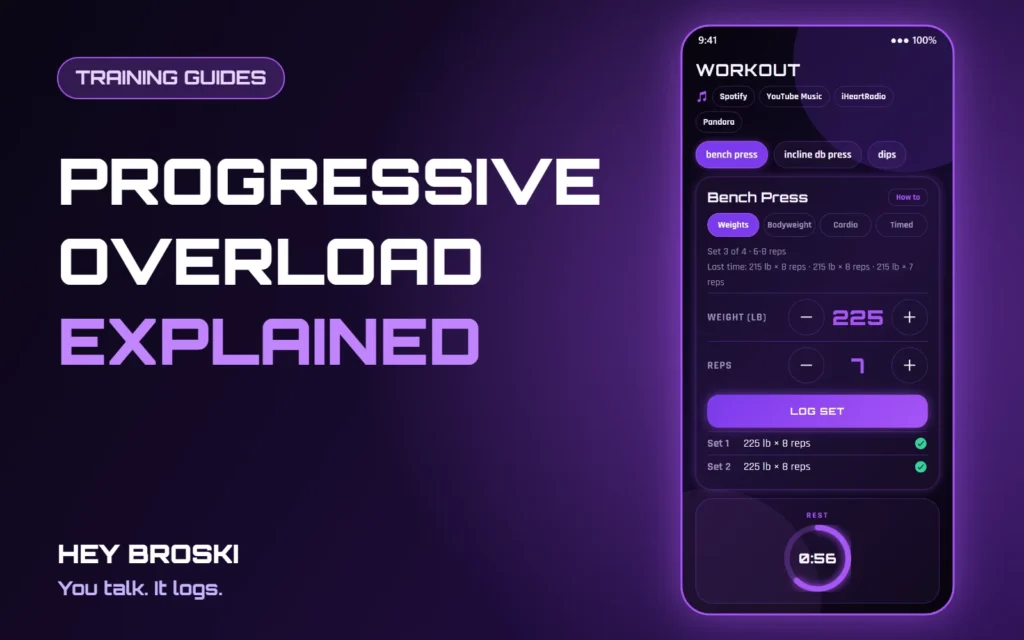
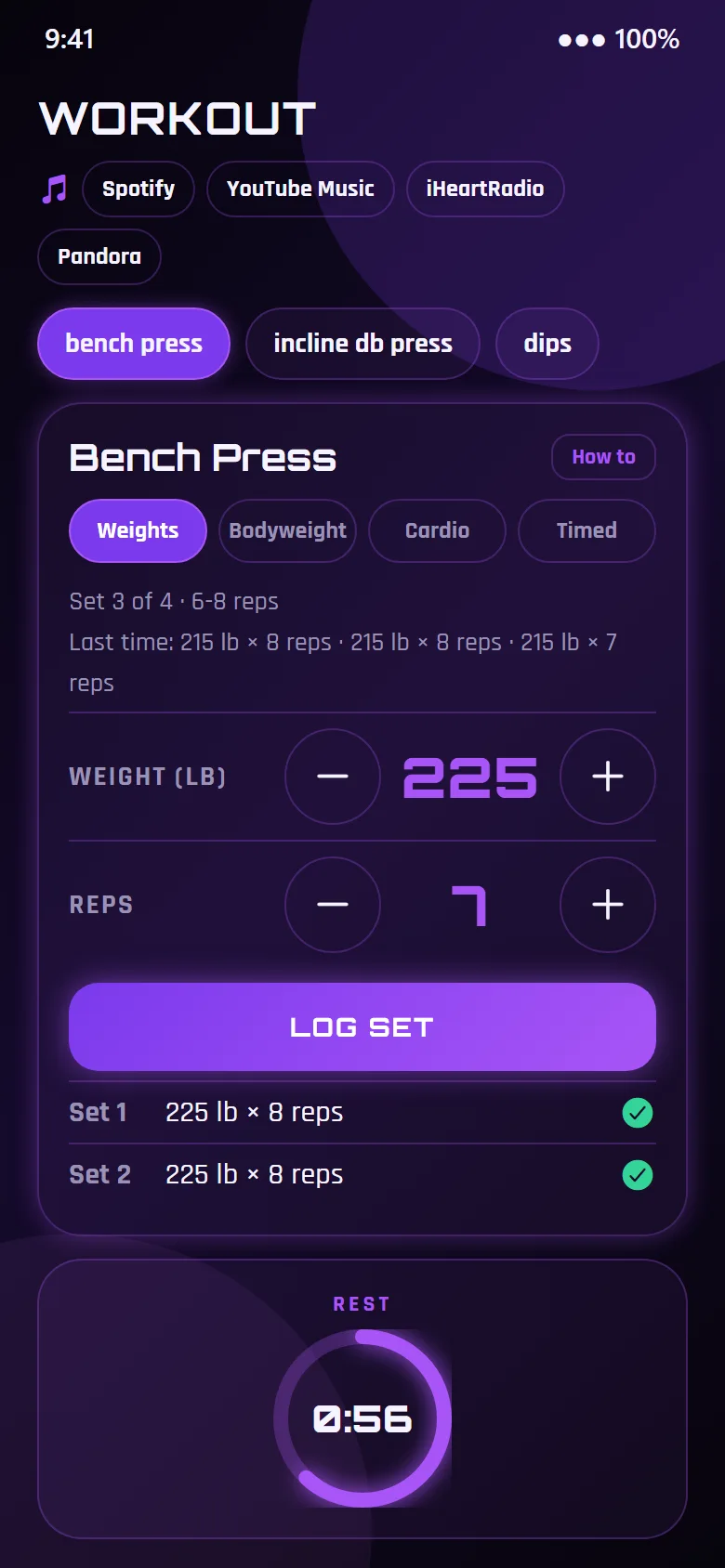
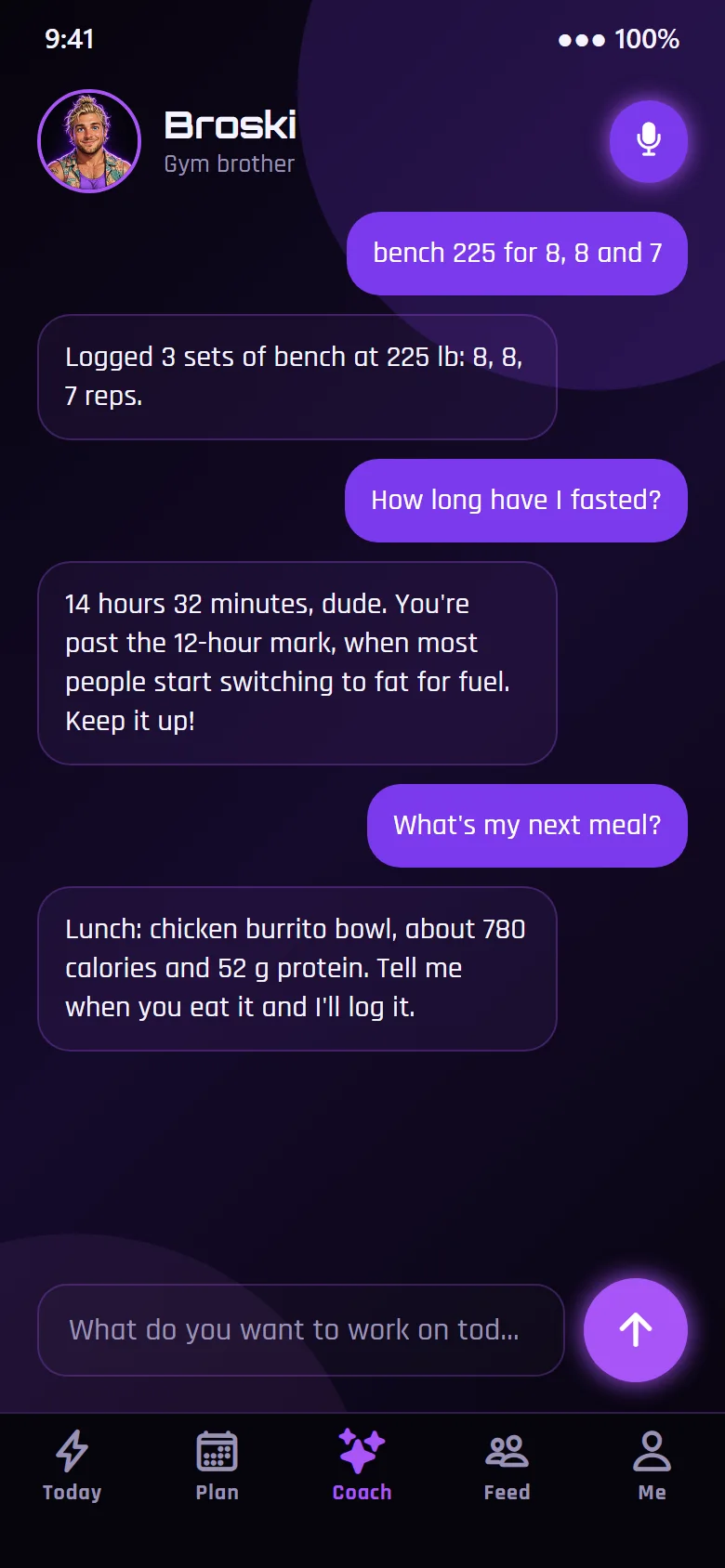
Hey Broski makes progression easy to follow. When you say “Log a set”, it remembers your last weight and reps, so you only say what changed. Your personal records update automatically, and your charts show how a lift is moving. Your coach can also answer questions like “should I add weight?” mid-workout.
Get Hey Broski on Google Play A hands-free fitness logging app. No ads, and an AI coach when you want one. iPhone coming soon.
Frequently asked questions
What is progressive overload in simple terms?
Gradually doing a little more over time, such as more weight, more reps or more sets, so your body keeps adapting.
How often should I progressive overload?
Beginners can often progress most sessions. As you get stronger, progress every week or two is normal.
Can I progressive overload without adding weight?
Yes. Add reps, add sets, slow the tempo or shorten rest periods.
What if I stop making progress?
Check your sleep, protein, rest and total weekly sets. Then try a small change, like adding one set or a slower tempo.
Keep reading
- How to track your workouts: the log that makes progression possible
- How many sets per muscle per week: a study-based guide to volume
- Push/pull/legs vs full body vs upper/lower: pick a split you can stick to
Choosing between apps? See the side-by-side comparison chart of eight AI fitness apps.
Get Hey Broski on Google Play A hands-free fitness logging app. No ads, and an AI coach when you want one. iPhone is coming soon. See what’s new.