Intermittent fasting sounds extreme, but the idea is simple: you eat inside a window and do not eat for the rest of the day. A lot of that time you are asleep. This guide helps you pick a window, build up gently and avoid the usual mistakes. It is general information, not medical advice.
Pick your window
- 12 hours: the easy start. Dinner at 8pm, breakfast at 8am. Much of that is sleep.
- 14 hours: a small step. Push breakfast back a couple of hours.
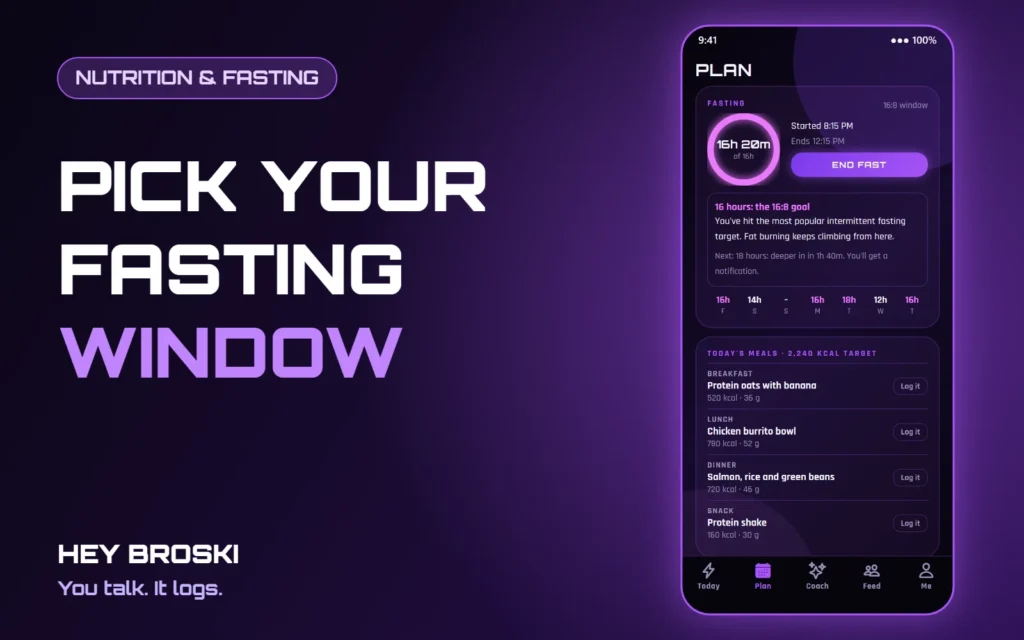
- 16 hours: the popular one. Skip breakfast, eat lunch, keep dinner where it is. This is the “16:8” you hear about.
- 18 hours: advanced. Do not start here. Build up to it over weeks.
If a window feels like a fight every single day, it is too long for now. Drop back an hour or two. Consistency beats suffering.
What is happening, in plain terms
After a meal, your body first uses sugar from food and stored sugar in your liver. As that store runs low, many people start using more fat for fuel and make ketones. Research puts this switch somewhere around 12 to 36 hours after the last meal (Anton et al., Obesity, 2018), and it varies from person to person. You will also see claims about cell clean-up (autophagy). In animal studies it rises with fasting, but how long it takes in people is not known yet, so do not plan your day around a number you saw online.
A simple first week
- Start at 12 hours for a few days. Learn the rhythm first.
- Keep the same window each day if you can. Your body likes a pattern.
- Drink water. Thirst can feel a lot like hunger, especially in the morning.
- Break the fast with a normal meal, not a reward feast, and include protein.
- Move up to 14 only when 12 feels easy. Then try 16 later.
Fasting and training
Plenty of people train fasted and plenty do not. If you lift and feel weak, dizzy or flat, that is your answer: move the workout inside your eating window or shorten the fast. Eating enough protein across your window still matters (see the protein post). Do not try to fast and cut calories hard at the same time; pick one change, get steady, then adjust.
Three mistakes to skip
- Jumping to 18 hours because someone online did.
- Changing your window every day so it never becomes routine.
- Skipping water. Log it as you go: say “16 oz water”.
Tracking it in Hey Broski
- Pick a fast: 12, 14, 16 or 18 hours. Start at 12 if you are new.
- Start the timer, or tell your coach “start my fast”.
- Get a notification at each milestone (12, 16, 18, 24 and 36 hours) and when you reach your goal. Quiet hours are respected.
- Ask “How long have I fasted?” any time.
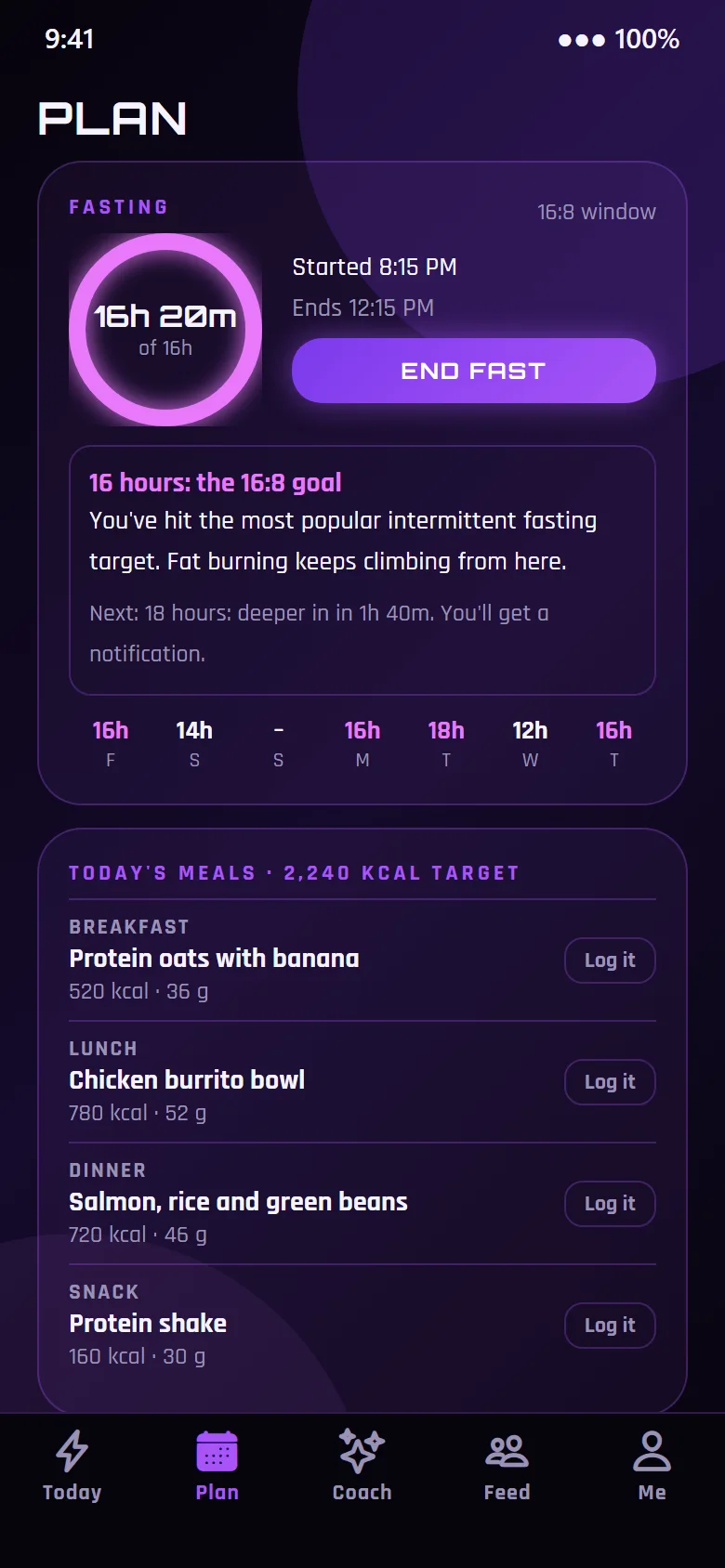
Your meals, calories and workouts live in the same app, so there is no separate fasting app and no second log. The milestone messages explain what is thought to be going on at that point and say plainly where the science is still unsettled.
Who should talk to a doctor first
If you are pregnant, have diabetes or another condition, take medication that needs food, or have a history of disordered eating, talk to a clinician before starting a fasting routine. Fasts of 24 hours or more are best done with your doctor’s OK.
Ready to track it? Hey Broski is live on Android on Google Play. Related: hands-free workout logging and your first 30 days.
Keep reading
- Hands-free workout logging: log water and workouts by voice
- Is it how much protein, or where it comes from?: the other half of eating well
- Your first 30 days of training: one habit at a time
Choosing between apps? See the side-by-side comparison chart of eight AI fitness apps.
Get Hey Broski on Google Play A hands-free fitness logging app. No ads, and an AI coach when you want one. iPhone is coming soon. See what’s new.